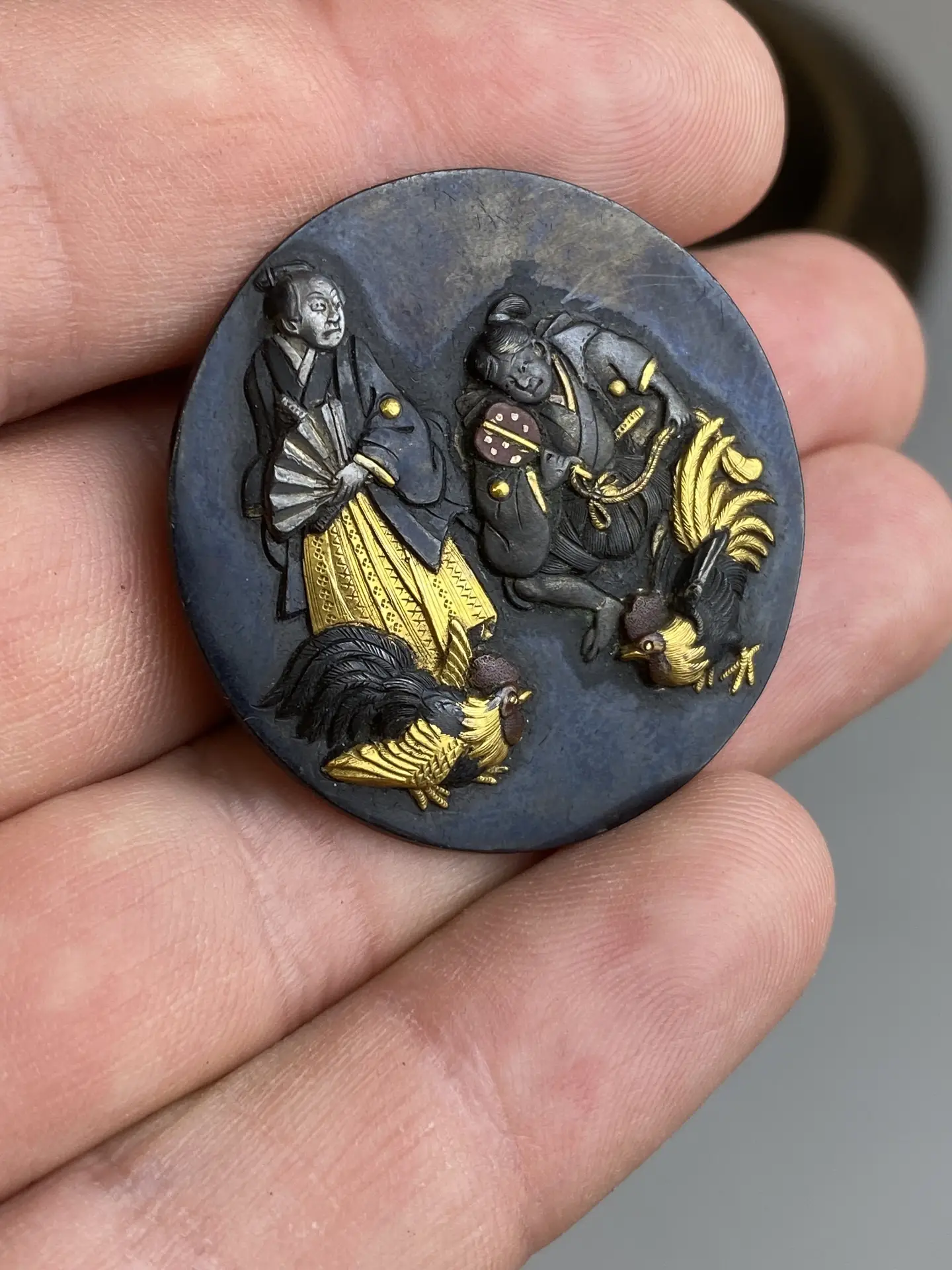
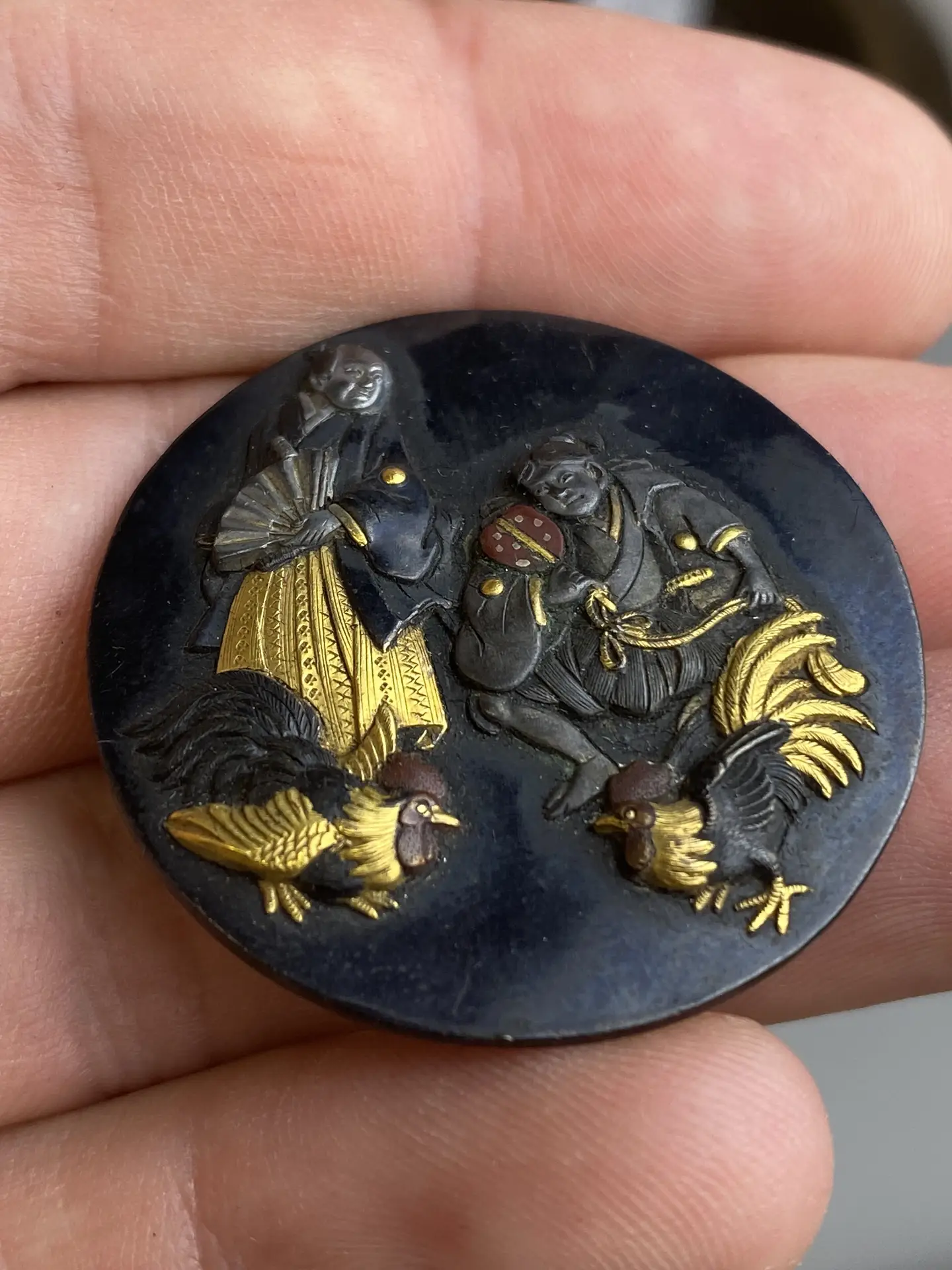
A fine and expressive Japanese mixed-metal Kagamibuta lid or medallion, likely from the late Edo to early Meiji period (mid-to-late 19th century). This circular shakudō piece is beautifully decorated with inlaid gold, copper, and silver, showcasing a lively scene of two figures and three roosters.
- One man is holding a fan (sensu), the other a hand drum (den-den daiko)
- Below them, three roosters with vivid gold and red detailing appear in dynamic interaction
- A traditional cockfight, which was a popular entertainment during the Edo period.
- The characters’ exaggerated expressions and poses may imply they are part of a Kyōgen or Kabuki comedic play involving rivalry, performance, or mischief with animals.
- The entire scene is finely inlaid using traditional iroe takazōgan technique (raised multi-metal inlay)
- Reverse side shows original hand tooling with cavities, consistent with being mounted as a Kagamibuta netsuke lid or decorative tsuba-style medallion
This type of decorative metalwork was popular during Japan’s transition from the Edo period to the Meiji era, particularly for export. The blend of humor, fine detailing, and theatrical energy is highly sought after by collectors of Japanese netsuke, menuki, and mixed-metal art. Could be displayed as-is or remounted into a Kagamibuta body or box inlay.
Condition: Excellent antique condition with natural age patina; no damage or restoration noted
Age: Late Edo to early Meiji period (circa 1850–1890)
Material: Shakudō with gold, copper, and silver inlay
Dimensions: 3.5 cm