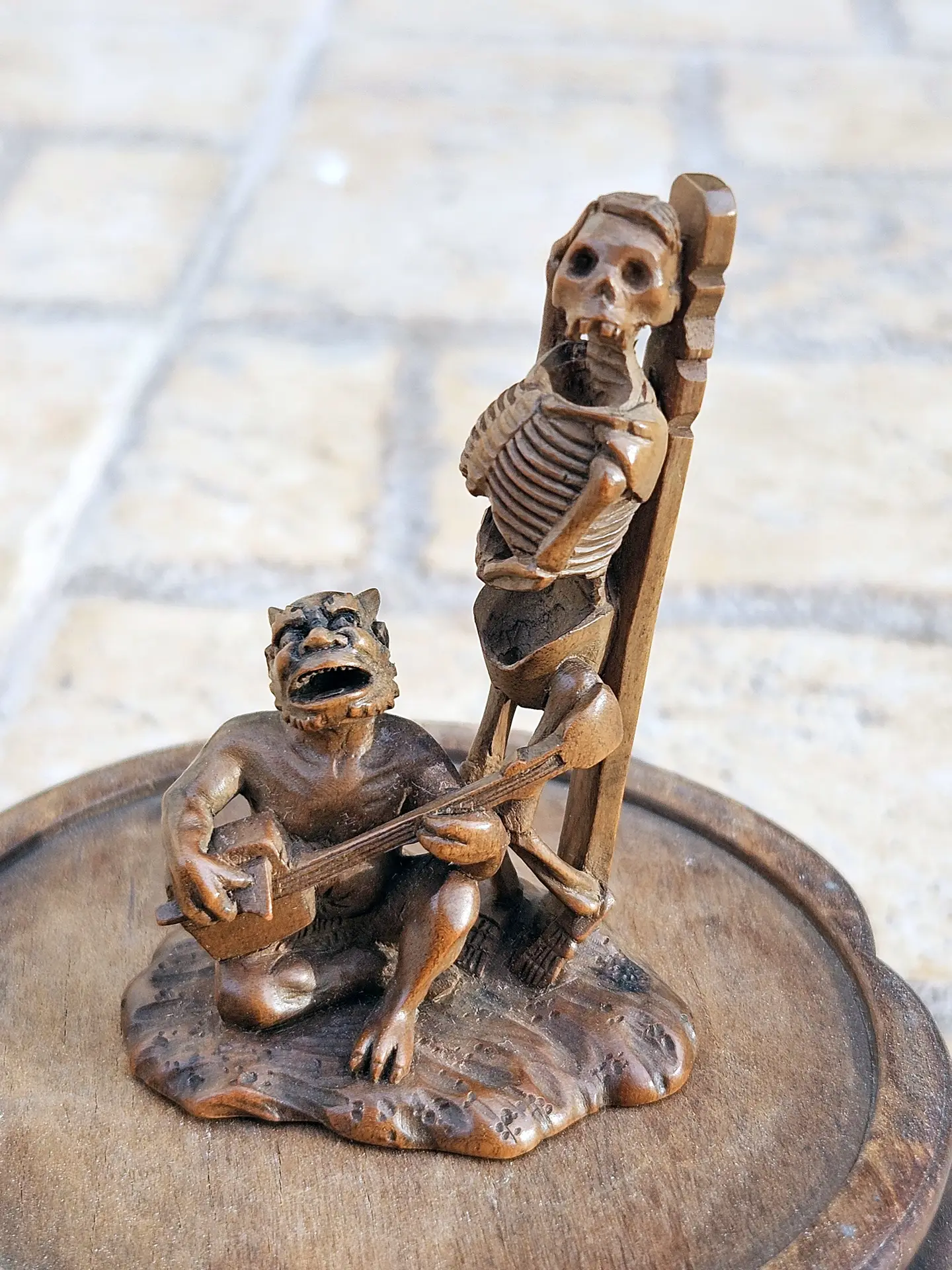
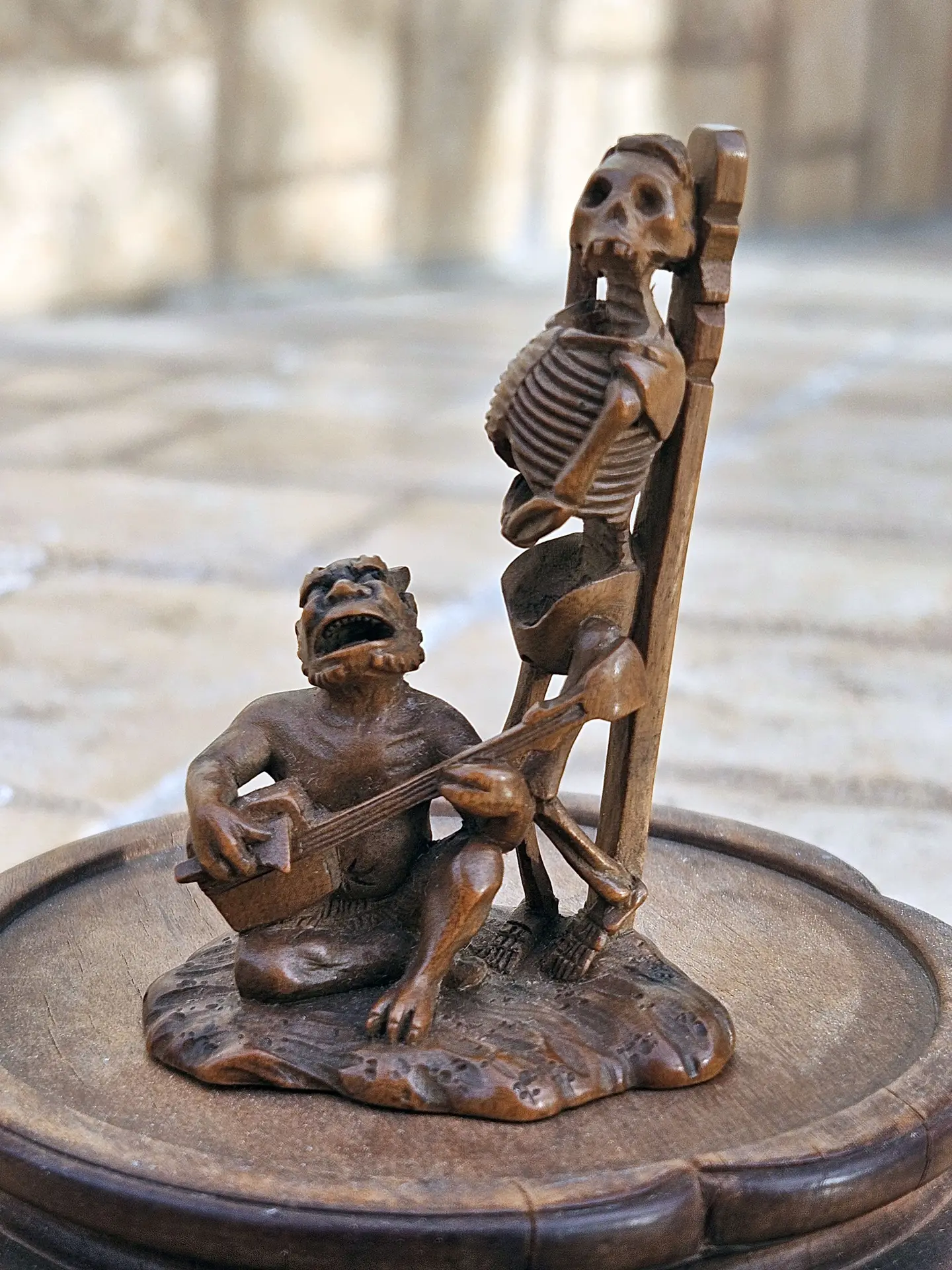
An extraordinary Japanese boxwood okimono (freestanding carving) depicting a skeleton leaning on a staff while an Oni (demon) sits before it, playing the shamisen, the traditional Japanese three-string instrument. The skeletal figure, rendered with remarkable anatomical precision, gazes downward, while the Oni — expressive and slightly comical — strums in apparent reverence or lament.
This complex Memento Mori composition reflects both Buddhist and folk themes of impermanence, mortality, and the fine line between the sacred and the absurd. The carving style and humor are characteristic of Hida-Takayama school carvers, known for their minute precision and dynamic storytelling in wood.
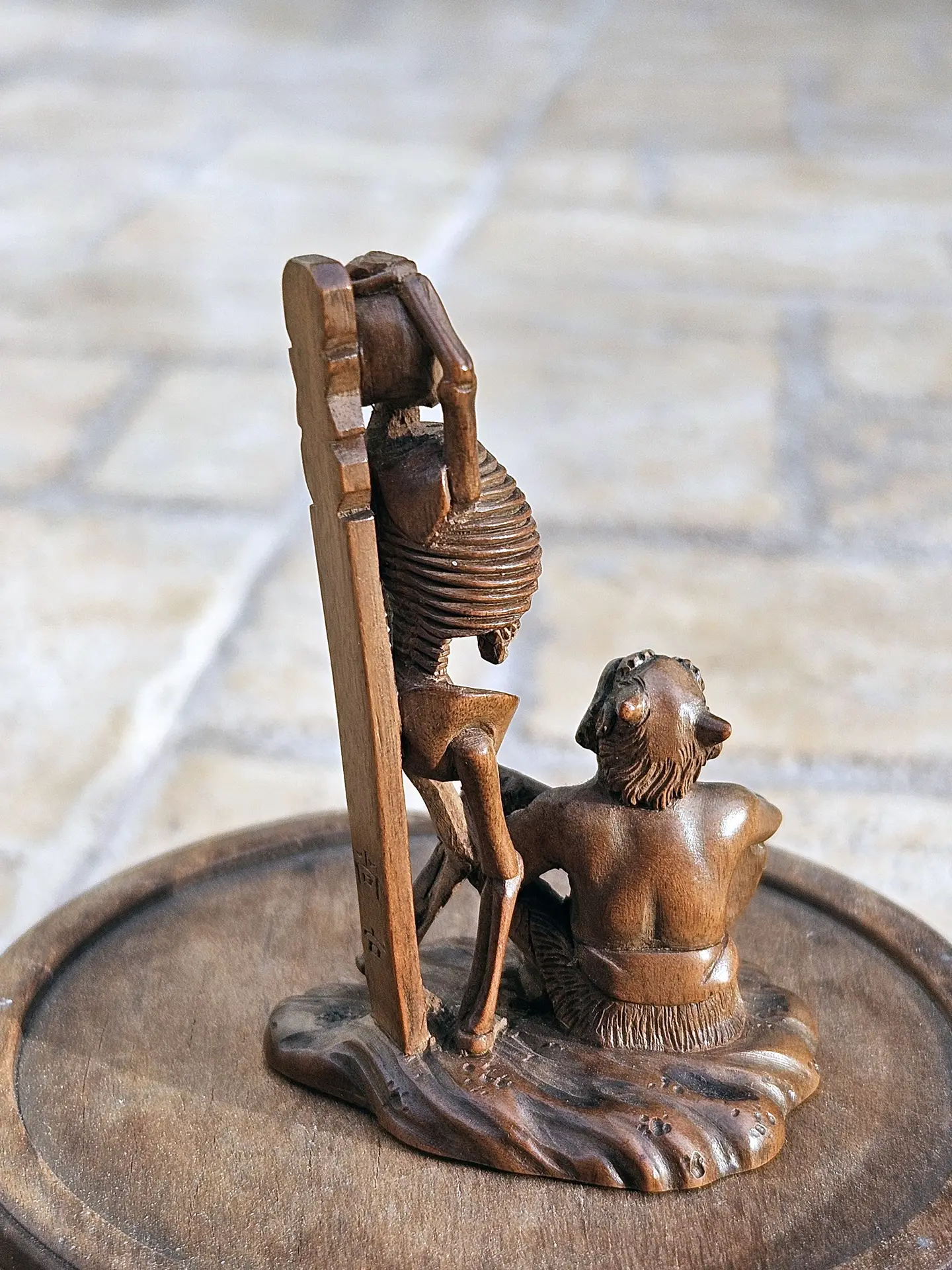
The signature 尚古 (Shōko) refers to Shōko Sugonoya, one of the finest 19th-century masters of the Hida school, whose works are housed in major netsuke and okimono collections worldwide.
The sculpture displays tremendous skill: fine openwork under the skeleton’s ribs, lifelike musculature of the Oni, and intricate string details of the shamisen, all executed from a single block of boxwood. The base is carved as rocky terrain with delicate tool marks — typical of authentic Takayama pieces.
Scholarly Notes:
Such dual compositions (Oni with skeletons or ghosts) were often allegorical, referencing Kyōgen theater, folk tales, and Buddhist parables. The musical element — the shamisen — reinforces the “song of impermanence” motif, symbolizing the fleeting joy of life in contrast with death’s inevitability.
Provenance & Estimate:
Likely from a private Japanese or European collection, acquired mid-20th century.
Comparable examples:
-
Bonhams London, 2019 – Boxwood okimono by Shōko, sold for £3,750.
-
Zacke Vienna, 2023 – Skeleton and Oni composition, sold for €2,800.
Provenance: from the Michahelles collection, Hamburg, which has grown over generations.