Finely Carved Japanese Wood Netsuke of a Skeleton Crawling Over a Human Skull (Dokuro) – Edo Period, 19th Century
Japan, Edo period (19th century)
Boxwood, superb patina and intricate carving detail
Height: 3.9 cm
Description
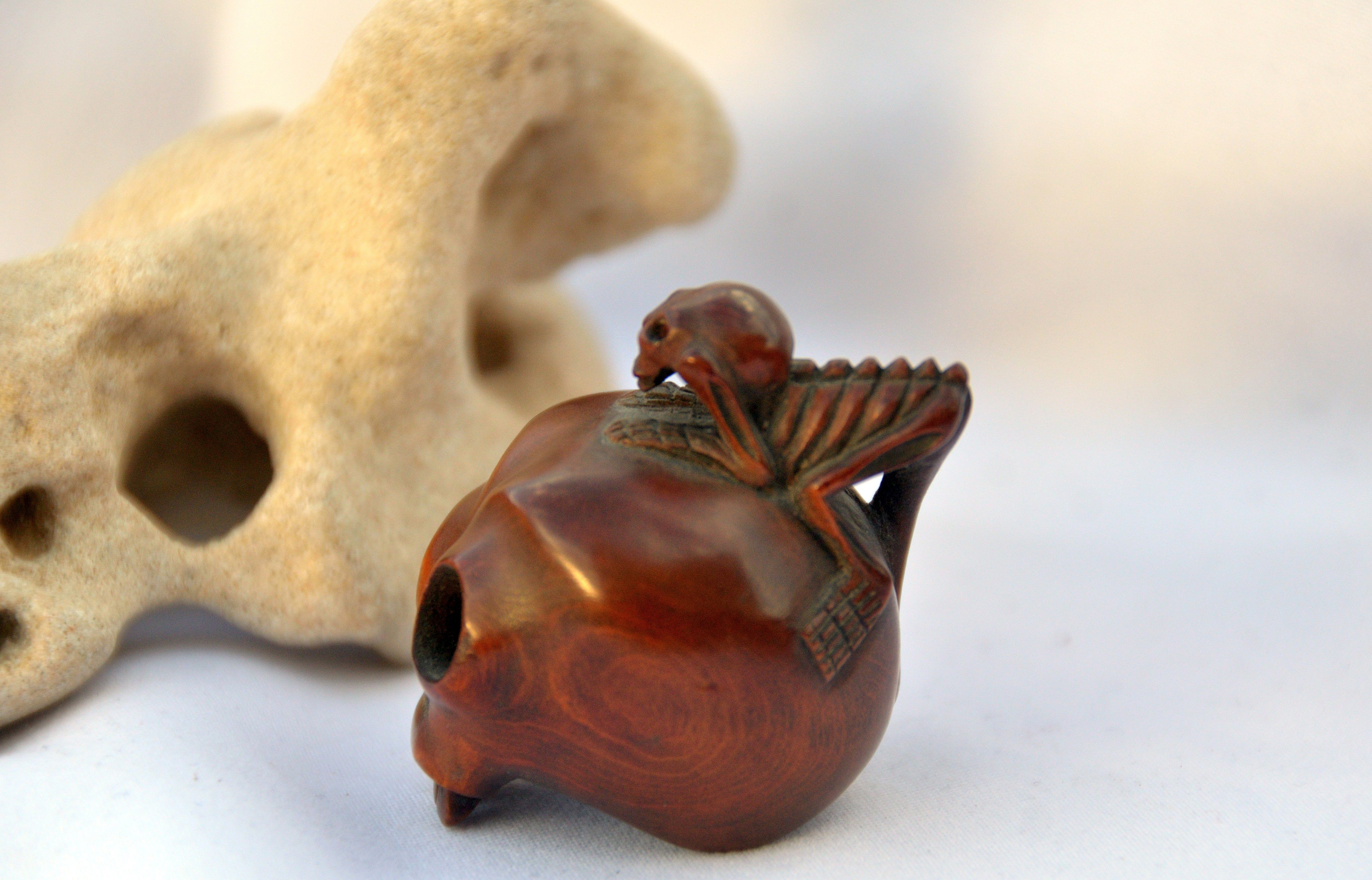
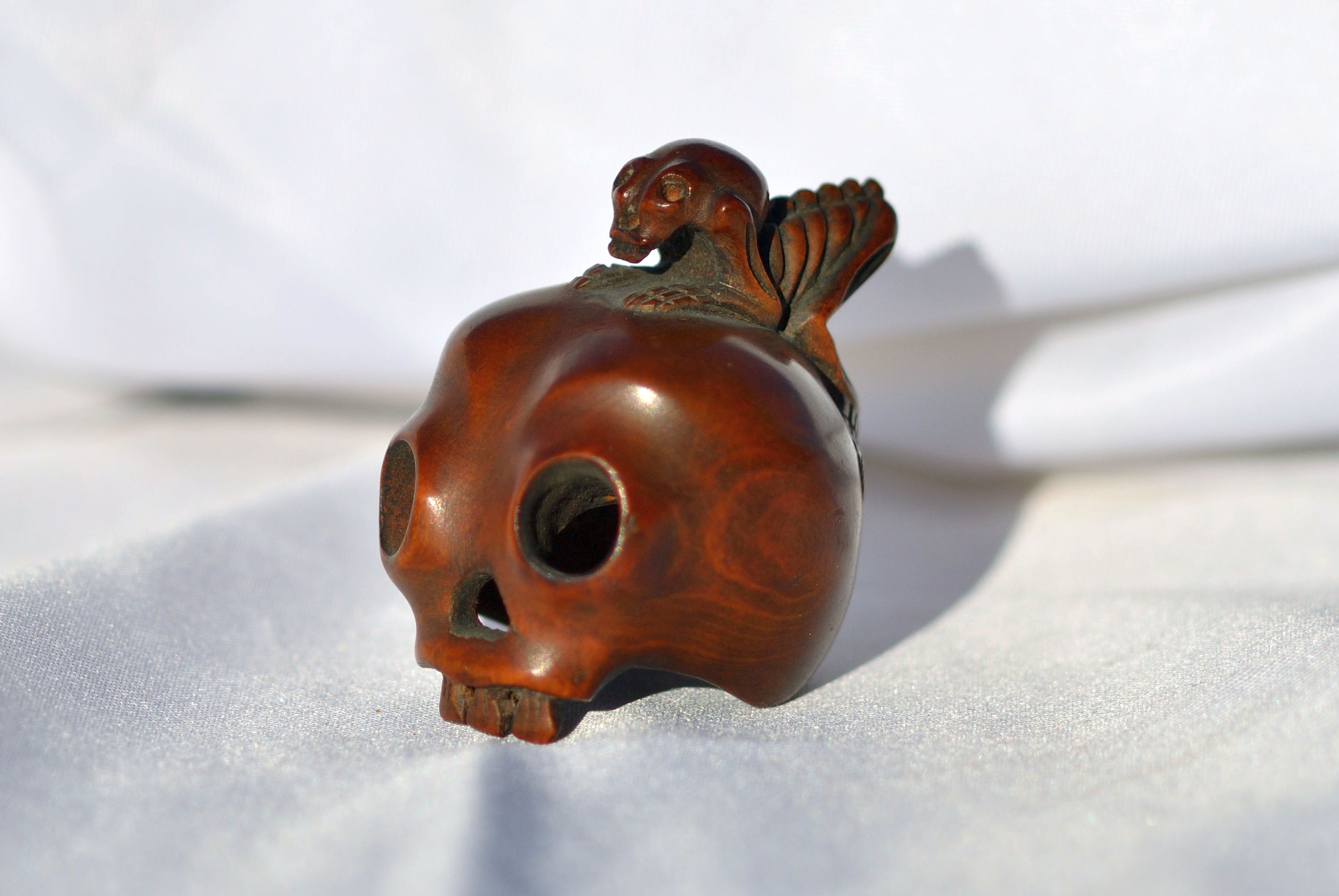
A finely carved 19th-century Japanese wood netsuke depicting a human skull (dokuro) with a grotesque, grimy-looking miniature skeleton climbing over its crown — a striking meditation on mortality and impermanence.
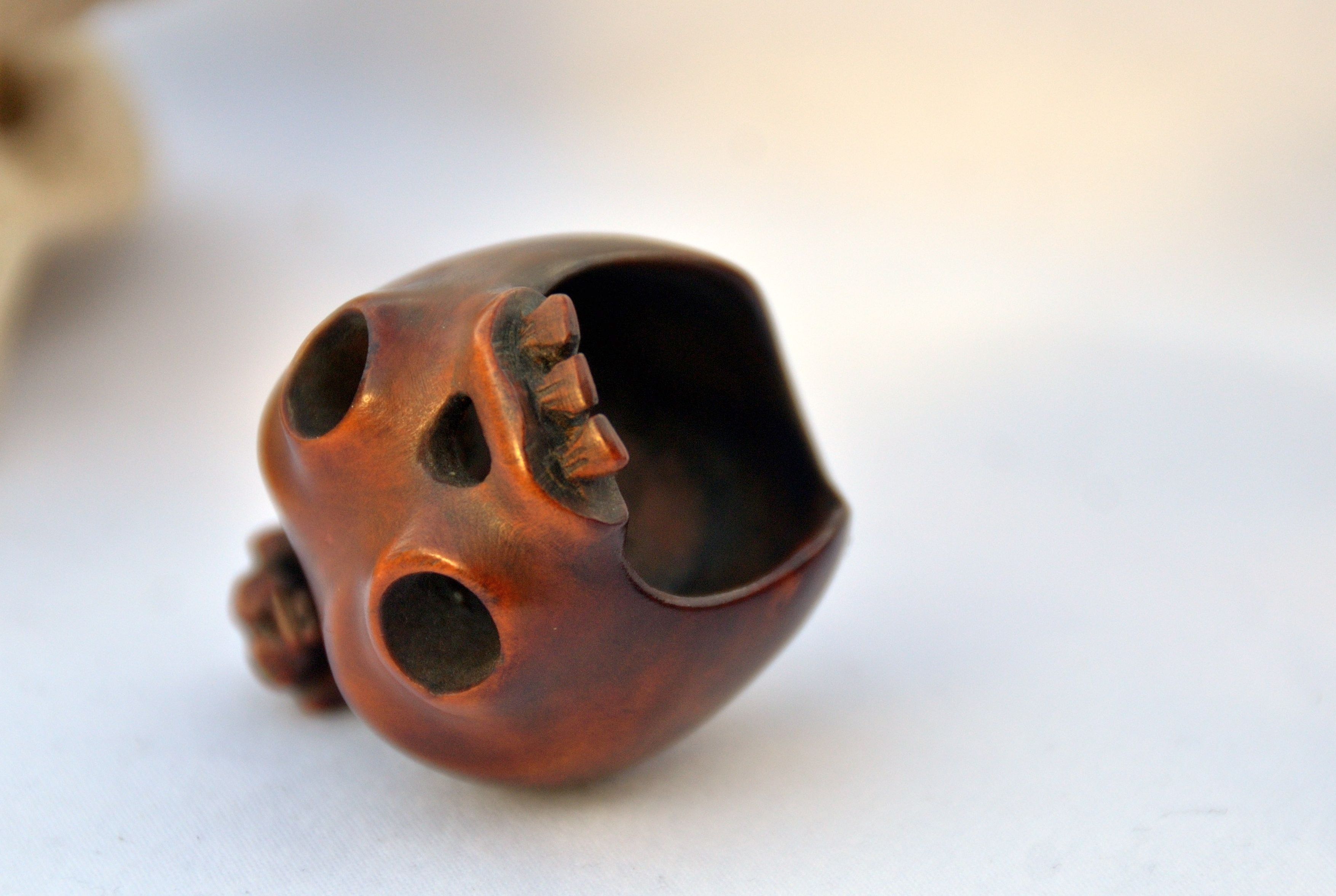
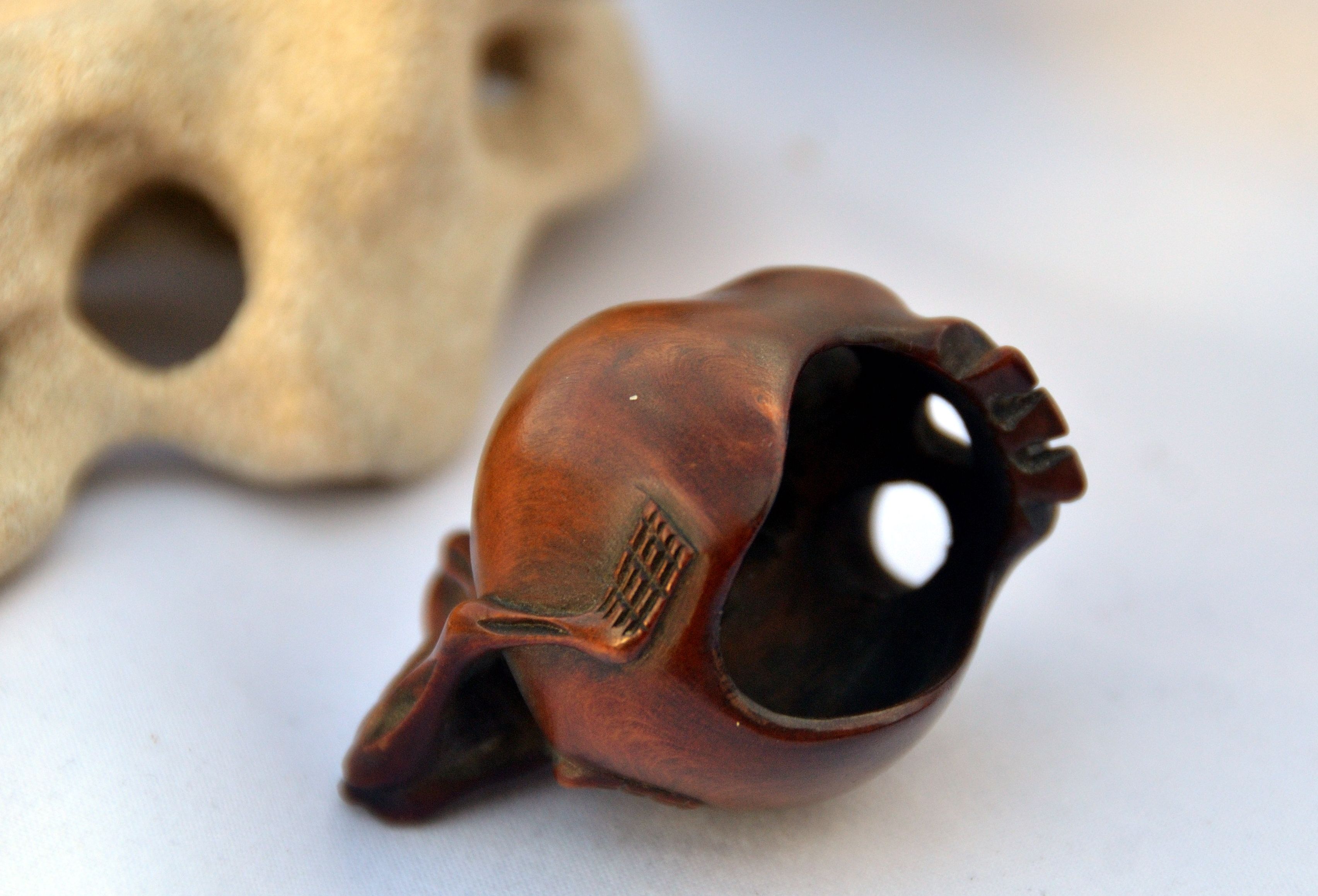
The skull is boldly modeled with deep, hollow eye sockets and defined teeth, while the skeletal figure clings to the surface with bony limbs and ribs rendered in remarkable anatomical precision.
The natural himotoshi are ingeniously placed between the eye sockets of the skull. The netsuke remains unsigned, and is in excellent condition without any breaks or losses. Various minute particles embedded in the crevices of the skeleton were intentionally left uncleaned to preserve the original surface and character of the carving.
The warm reddish-brown tone of the boxwood enhances the sense of age and depth, its smooth polish contrasting beautifully with the darker, textured recesses of the skeleton.
Condition
Excellent original condition with smooth patina, minor natural age lines consistent with period. No breaks or repairs.
Provenance
Property from the Estate of Mr. and Mrs. Maurice Fry, Hoffman Estates, Illinois.
Remarks
This symbolic composition—the living skeleton intertwined with the remains of a skull—embodies the Buddhist concept of impermanence (mujo) and serves as a memento mori, reminding the viewer of life’s transitory nature.
Such carvings appealed to Edo-period collectors fascinated by the philosophical and macabre, merging technical mastery with spiritual reflection. Comparable examples are preserved in major museum collections, including The Metropolitan Museum of Art and The British Museum.